What is lime pointing?
Updated: Feb 23
Pointing can be a different language so here’s a quick explanation of the common terms that are used if you want to sound like a pro:
Lime mortar work
Lime mortar: a mortar made in the traditional way only using lime and sand. It cures through a chemical process and can last hundreds of years.
Lime putty. Image on the website of Gladstone Pointing Limited, West Bridgford, Nottinghamshire
Mature lime putty: the best source of lime for lime mortar, giving a consistent and quality finish. Gladstone Pointing uses lime putty consistently in pointing work (and sells it too). The alternative is Naturally Hydrated Lime, which is a good product but can cost more than lime putty in terms of waste and reuse, and which does not give as fine a finish.
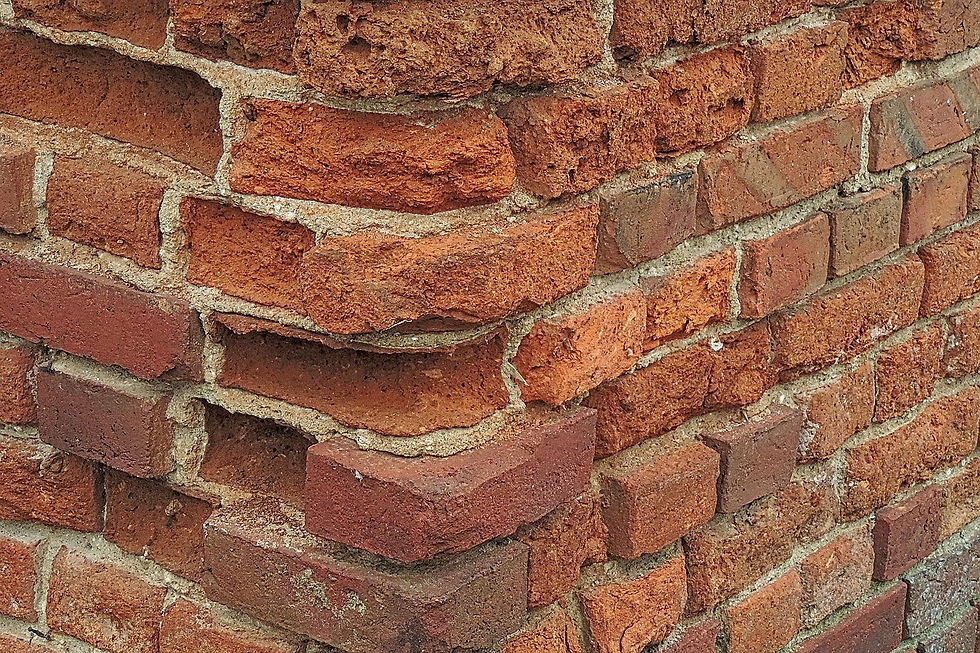
Badly pointed wall example. Image on the website of Gladstone Pointing Limited, West Bridgford
Cement Mortar: Harder modern mortar; often too rigid for older brickwork, but can be useful on older chimneys that have been built out of strengthened-engineering bricks.
When Gladstone Pointing Limited uses cement mortar, it is usually White Cement (ie. cement with greater purity/lower iron content and matches well with lime based). This is not as good as lime mortar in most areas of a house but is best for chimneys.
Jointing styles (all images below are of my work)
Specialist pointing by Gladstone Pointing Limited, West Bridgford, Nottingh Specialist pointing by Gladstone Pointing Limited, West Bridgford Specialist pointing by Gladstone Pointing Limited, West Bridgford
Penny-rolled Pointing: a style of pointing used with earlier Victorian housing (used with wider joints) that involves flush pointing and then adding recessed lines in the centre of joints (to break the surface and trick the eye into seeing a smaller expanse of mortar.
Birds Beak Pointing: a style of pointing where the surface is angled at the top of bottom of a joint. Can only be used on wide joints and was traditionally used for Tudor or Victorian/Edwardian arts and craft-style houses.
Flush or Conservation Pointing: mortar is finished level with the face of the brickwork (most common for Edwardian houses and before).
Recessed Pointing: mortar is finished set back from the brick surface (most common for newer houses).
Tuck Pointing: a decorative style: mortar is coloured to match the brick, then a thin line of contrasting lime putty is added.
Stone wall repointing by Gladstone Pointing Limited, West Bridgford Nottinghamshire Stone wall repair by Gladstone Pointing Limited, West Bridgford Nottinghamshire
The above images show stone repair and stone pointing that I have done.