Lime mortar v cement: why use lime mortar
Updated: Feb 23

Lime and cement are both widely used binders in construction, but they behave very differently. Choosing between lime-based mortar and cement-based mortar depends on the building’s age, material compatibility, moisture needs, and environmental goals — especially for Edwardian, Victorian, and earlier properties.
1. Material Compatibility and Flexibility
Lime is more flexible and ideal for historic masonry
Lime mortar is softer, more elastic, and more permeable than cement. This flexibility allows older buildings to move naturally without cracking, making lime the safer choice for historic brick and stone, which are generally softer than modern materials.
Lime mortar is breathable and flexible, allowing moisture to evaporate and buildings to move slightly without damage.
Cement is strong but inflexible
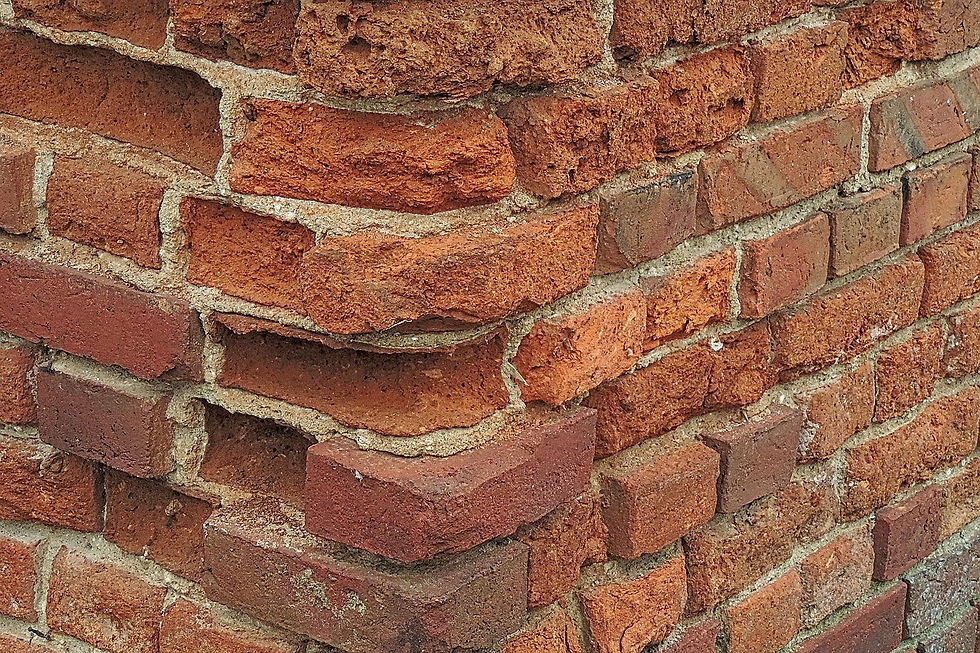
Cement mortar is rigid and less forgiving. When used on older buildings, it can cause cracking and force moisture into the bricks or stone, accelerating decay. This mismatch between hard cement and soft historic masonry has caused widespread damage in conservation settings.
Conclusion: Lime mortars are preferred for conservation because their softness protects historic materials, while cement can cause long‑term deterioration.
2. Moisture Management (Permeability and Breathability)
Lime allows walls to breathe; cement traps moisture
Moisture control is one of the biggest differences between lime and cement.
Lime mortar is highly breathable and porous, allowing moisture to escape safely. This reduces damp, salt crystallisation, and frost damage.
Cement mortar is non‑breathable and often traps moisture inside older walls, leading to spalling bricks, damp patches, and structural decay.
Lime has a significantly lower long‑term carbon footprint than cement (the carbon footprint of cement-based mortar is around 5.5x the impact of lime mortar.
Research shows that lime mortars are far more sustainable over a building’s life cycle.
Cement production is energy‑intensive and produces high CO₂ emissions.
Lime absorbs CO₂ during the curing process, partially offsetting its production footprint (which is significantly lower than CO₂ produced in cement manufacture).
A 100‑year life‑cycle study found cement‑based repairs have 43–348% higher global warming potential than lime‑based alternatives.
On a practical level, I source lime quarried in Buxton and collect it using an electric vehicle. Cement, by contrast, is transported nationwide from plants in Wales, Scotland, and Derbyshire, meaning locally bought cement is not always locally produced.
4. Durability Through Autogenous Healing
Lime can self‑heal small cracks.
Lime mortar has a unique property called autogenous healing, where microcracks naturally re‑crystallise with calcium carbonate. This extends the lifespan of masonry and reduces maintenance.
Cement mortars do not self‑heal and tend to crack progressively with movement or temperature changes.
Source: Simulation of Autogenous Self‐Healing in Lime‐Based Mortars (Cardiff University)
5. Suitability for Heritage and Restoration
Lime is the conservation standard for older buildings in England.
Across Europe and internationally, lime mortar is the recommended material for restoring historic buildings.
Lime mortars have been used successfully for thousands of years.
Many ancient structures remain intact due to lime’s breathability and flexibility.
Cement mortars have been shown to accelerate decay when used in heritage masonry.
In Nottinghamshire the relevant guidance is:
In Leicestershire (and Rutland) the relevant guidance is:
All maintenance to a listed building must be carried out in accordance with the maintenance and repair guidance below. Please identify when seeking advice if your property is listed. This guidance is applied by all local authorities:
If you are planning to make alterations to a listed building you need to follow guidance in: