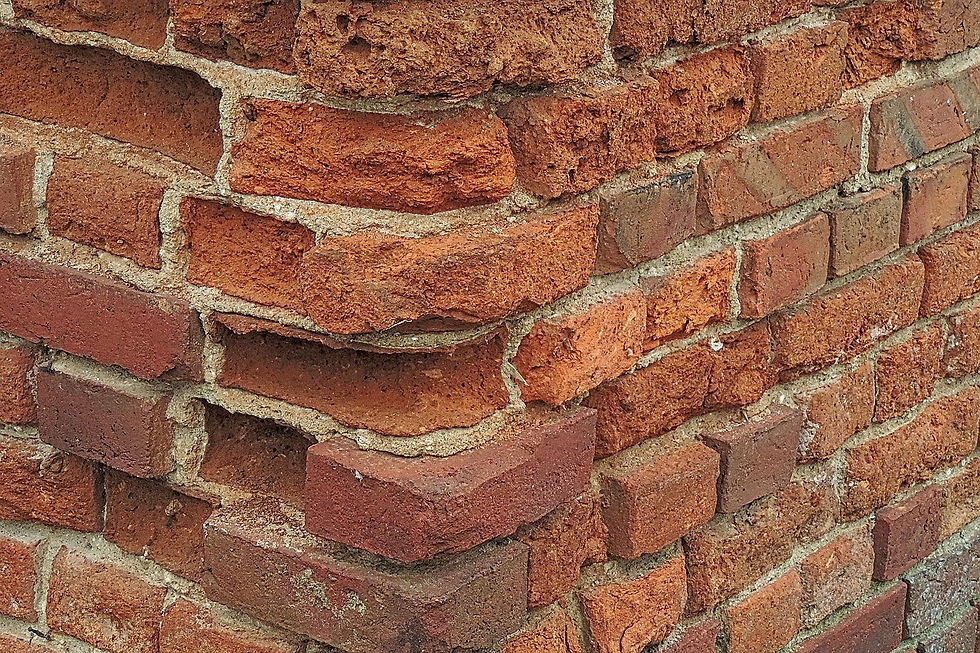
How do walls get damaged?
Updated: Feb 23
There are three main issues that damage brick/stone:
Water/ice
Structural movement
Plants
Water damage
Water-damaged wall.Image on the website of Gladstone Pointing Limited, West Bridgford, Notts Spalled wall.Image on the website of Gladstone Pointing Limited, West Bridgford, Notts Badly pointed wall example. Image on the website of Gladstone Pointing Limited, West Bridgford
Water can erode mortar and erode brick/stone. You can see water damage through salts on the outside (like near the deer), rounded brick edges and gaps in mortar. If water damage gets worse then it can take the face off bricks… which then increases the amount of water entering the wall. Older bricks get more damaged by water if the mortar that surrounds them is harder than the brick. This can lead to major brick damage as shown in the final picture. Cement mortar should not be used with older bricks - lime mortar is more suitable.
In areas near the Trent ground water/flooding can accelerate this process.
The most effective way to prevent brick damage is to check your gutters are clear annually and look for any running water on your walls when it rains.
Structural movement
Crack in wall. Image on the website of Gladstone Pointing Limited, West Bridgford, Notts Damaged bricks.Image on the website of Gladstone Pointing Limited, West Bridgford, Notts Worn bricks.Image on the website of Gladstone Pointing Limited, West Bridgford, Notts
Cracks happen as the ground settles or is disturbed with a new extension or by trees. They are often cosmetic and natural in older homes. The middle picture shows some more serious movement, which needs some replacement bricks and possibly steel ties. The final photo shows structural movement caused by long term water damage.
There isn’t much you can do to prevent cracking - though watering the ground around your house in very hot weather can help.
Plants
Ivy on wall. Specialist pointing by Gladstone Pointing Limited, West Bridgford, Notts Ivy on wall. Image on the website of Gladstone Pointing Limited, West Bridgford, Notts Foliage on wall. Image on the website of Gladstone Pointing Limited, West Bridgford, Notts
Climbing plants can look fabulous on outside walls, but their roots can grow through mortar and cause water to enter buildings.
You can stop plant damage by not letting plants grow on walls but if you love the look of plants on walls then periodically you need to check the wall behind the plant for signs of damage.