What happens during a pointing job?
Updated: Feb 23
What’s involved in replacing mortar in walls?
Replacing mortar is a five-step process:
1. Remove existing mortar that isn’t fit for purpose
2. Clean and restore bricks/stone
3. Put new mortar in place
4. Cover to cure
5. Three-week check
Badly pointed wall example. Image on the website of Gladstone Pointing Limited, West Bridgford Bad pointing example. Image on the website of Gladstone Pointing Limited, West Bridgford, Notts Bad pointing example. Image on the website of Gladstone Pointing Limited, West Bridgford, Notts
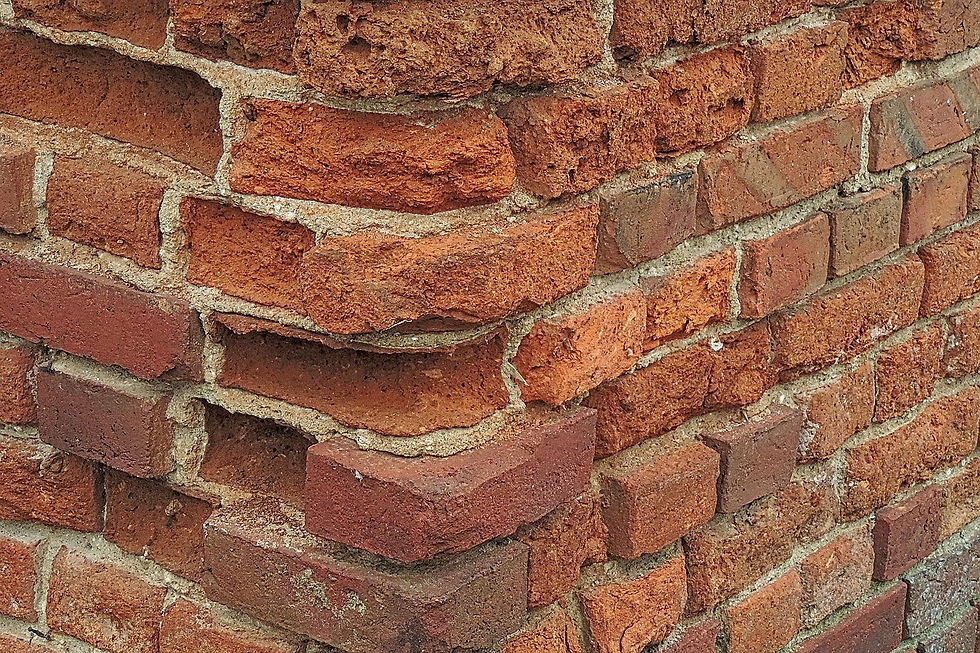
Remove existing mortar that isn’t fit for purpose
Important to emphasise none of those pictures are of my work!
There are contractors who want to use just power tools to remove mortar and there are some homeowners who want hand tool removal of mortar.
Around 2.5cm/1” of existing mortar needs to be removed to enable new mortar to have sufficient surface to adhere to – and any deeper than 2.5cm/1” increases the risk of air pockets in the mortar. Air pockets can cause mortar have a shorter life-span.
Gladstone Pointing Limited uses a middle way – using fine power tools slowly, which leave several millimetres of mortar next to bricks and then removing mortar next to bricks by hand. This protects brick and stone from damage that fast grinding work can do but reduces cost compared to hand tool removal only.
Problem wall example. Image on the website of Gladstone Pointing Limited, West Bridgford, Notts Flaking paint wall. Image on the website of Gladstone Pointing Limited, West Bridgford, Notts Wall with limestain issue. Image on the website of Gladstone Pointing Limited, West Bridgford, Notts
Clean and restore bricks/stone
Bricks/stone may have paint marks or the surface may have come off (spalling). Once the area is clear of old mortar, work to restore or clean brickwork happens.
Bricks/ stone can be simply turned around or may need to be replaced, depending on the damage to them. Stone can be repaired with a lime-based product that tones in with existing stone (picture at the bottom of the page in the link at the start of the sentence). This can also be done with small areas of brick, using traditional natural earth dyes to achieve a long-lasting colour match.
Example of lime stain. Image on the website of Gladstone Pointing Limited, West Bridgford, Notts Example of lime stain. Image on the website of Gladstone Pointing Limited, West Bridgford, Notts Lime stain Image on the website of Gladstone Pointing Limited, West Bridgford, Notts
Put new mortar in place
Again I want to emphasise the above pictures are not of my work. It’s important to avoid getting lime on bricks and stones because it can leave long term stains on a property. Gladstone pointing uses traditional narrow pointing tools to minimise this risk – and uses experience/skill.
Gladstone pointing also removes any small lime stains that can develop upto three weeks after pointing, using natural removal products: which are highly effective.
Hessian.Image on the website of Gladstone Pointing Limited, West Bridgford, Notts Hessian.Image on the website of Gladstone Pointing Limited, West Bridgford, Notts
Cover to cure
It is essential to cover new lime mortar for around three days. This should be done with hessian material – attached with clips to cover newly pointed areas. This material must be kept damp but not wet. This step of the process keeps the chemical reaction between the lime and the moisture in the air stable. This allows a strong surface cure, which protects the mortar while all of it cures.
The curing process for lime mortar to reach full strength takes up to 18 months. This initial protection for three days is essential to ensure new mortar does not wash away. This is also the reason why new mortar can’t be put in a wall during periods of prolonged heavy rain or in periods when the outside temperature is likely to drop below 5oC – both of which are likely to affect the curing process of lime mortar surface and make it weaker over time.
checklist icon. Specialist pointing by Gladstone Pointing Limited, West Bridgford
Three-week check
As lime mortar is a natural product it can have some small irregularities in it that appear over the curing process. It’s important for contractors to review new lime mortar after around three weeks to finesse the final look and ensure that the mortar will maximise its strength.
Gladstone Pointing Limited seeks to minimise the risk of small irregularities by only using finely sifted sand.
Gladstone Pointing Limited's other posts