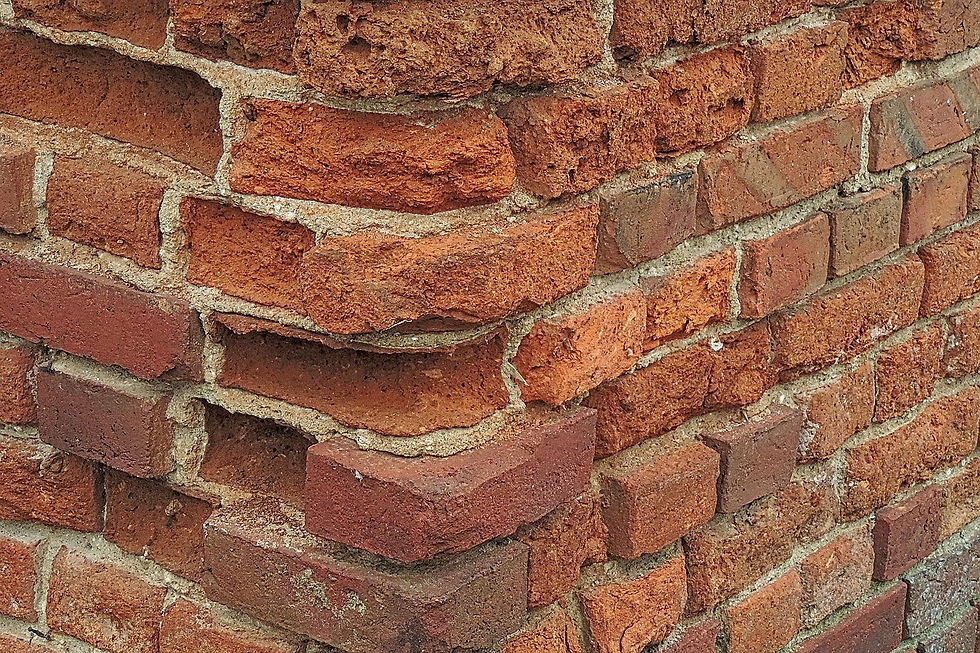
History of lime mortar
Updated: Feb 23
Lime mortar has been used by millennia: and what’s good enough for the Romans, the Egyptians, the Greeks and the ancient Indus Valley civilisations is also good for Nottinghamshire and Leicestershire!

The Great Pyramid of Giza (c. 2600 BC) — Egypt
The Great Pyramid (and subsequent pyramids) was built using lime putty as mortar to keep a precise shape to the stone structure.
Mohenjo‑Daro and Harappa of the Indus Valley Civilization (c. 2600–1900 BC) — Present‑day Pakistan & India
Both sites were built from fired bricks and lime mortar to a very similar mix as is used today.
Ancient Greek wall. Image on the website of Gladstone Pointing Limited, West Bridgford, Nottinghams
Classical Greek Monuments (447–432 BC) — Greece
While the famous ancient public buildings in Athens were made of precision cut stone that was slotted together, other buildings were built out of less precision-cut stone and lime mortar was used for stability.
Early Roman Structures Such as the Colosseum (70–80 AD) and the Pantheon (AD 126) — Italy
Roman lime mortar and opus caementicium (ancient concrete) were both made by lime, volcanic ash and sand. This material holds up the Colosseum and the Pantheon (including its amazing domed roof).
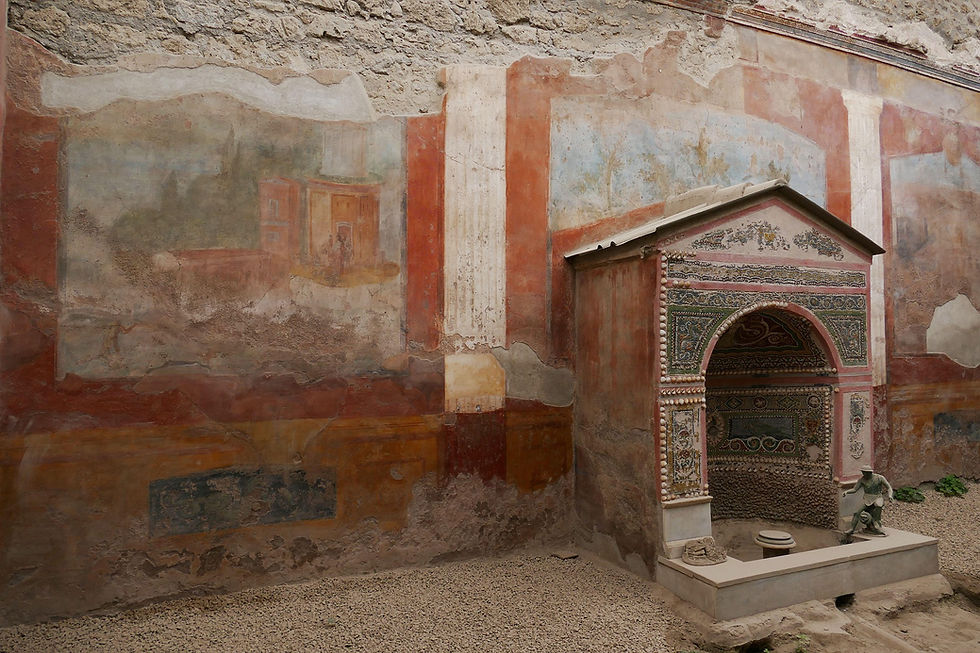
Frescos from Pompeii and other ancient sites were made by using lime plaster and natural earth pigments. (Both of which are still in use today – Gladstone Pointing uses natural earth pigments to match mortar colours).
Where lime mortar wasn’t used
Generally, there is not clear evidence that lime mortar was used in sub-Saharan Africa and the Americas until colonisation. Most high status monument buildings were precision-cut stone without mortar and in less grand buildings (with irregular stone) then a gypsum-based mortar was used, which reflects locally available materials and heritage.
Lime in the UK

Lime mortar came into Ancient Britain with the Romans. It was not used before the Roman invasion, despite large quantities of limestone being available. One of the earliest structures using lime mortar in the UK is Hadrian’s Wall (AD 120).
St Peter's on the Wall church. Image on the website of Gladstone Pointing Limited, West Bridgford, N St Peter's on the Wall church. Image on the website of Gladstone Pointing Limited, West Bridgford, N
Lime continued to be used throughout the Roman period and into the Early Medieval and Anglo‑Saxon Period (5th–11th century) – although use reduced and most homes were made from wood. There are some lime mortar church buildings that survive from the 7th–11th‑century (e.g., Escomb Church or St Peter‑on‑the‑Wall)
Windsor Castle. Image on the website of Gladstone Pointing Limited, West Bridgford, Nottinghamshire Tower of London. Image on the website of Gladstone Pointing Limited, West Bridgford York walls. Image on the website of Gladstone Pointing Limited, West Bridgford, Nottinghamshire
Lime mortar use became more common from the late Medieval period (12th -15th century) with buildings including the Tower of London and Windsor Castle (11th century) and York City Walls (13th to 14th century section).
Parliament. Image on the website of Gladstone Pointing Limited, West Bridgford, Nottinghamshire Prudential Building. Image on the website of Gladstone Pointing Limited, West Bridgford, Nottingham St Pancras' station. Image on the website of Gladstone Pointing Limited, West Bridgford, Nottingham
Lime mortar continued to be widely used through to the 1920s, though Portland cement (which was first sold in 1824) started to be used with buildings made with hard stone (like granite) and with more buildings as bricks were made harder (able to manage a higher compression tension). Most Victorian and Edwardian domestic/brick built buildings were built with lime mortar.
Where buildings were built using older bricks or softer stone, it is important to use new lime mortar to make any repairs.
Eco house. Image on the website of Gladstone Pointing Limited, West Bridgford, Nottinghamshire Eco house. Image on the website of Gladstone Pointing Limited, West Bridgford, Nottinghamshire
The late 20th century revival – in addition to increased use of lime mortar to maintain Tudor, Regency, Victorian and Edwardian buildings; more eco homes are built with lime mortar because there is a green reason to use lime mortar:
Lime mortar has a significantly lower embodied carbon compared to cement‑based mortars.
Lime mortars reabsorb a significant amount of CO₂ as they cure – which cement does not do
Cement production is responsible for ~8% of all global CO₂ emissions, whereas lime offers a far cleaner alternative.